 EN
 Italiano
 Deutsch
 Français
 Español
 Polski
 Română
 日本語

Neapolitan food: the real names of the dishes, their history and where to eat them
In Naples, dishes are called with the article in front, like members of the family: ’a genovese, ’o babbà, ’e friarielle, ’a parmigiana ’e mulignane, ’e purpette. In Neapolitan the article is ’o for the masculine, ’a for the feminine and ’e for the plural, and the apostrophe marks the missing letter. Behind almost every name there is a story: sometimes written down in recipe books, sometimes only passed on by word of mouth.
In this guide you will find the dishes of Neapolitan cuisine that are on our menu, with the name Neapolitans use, what they are and the most interesting historical fact about them. Where the story is a legend, we say so. Each dish has its own page, with ingredients and allergens.
Starters and fried dishes
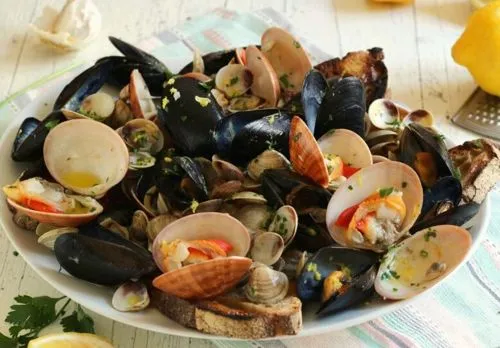
’A ’mpepata ’e cozze. Impepata di cozze is the simplest way to cook mussels: opened over a high flame with plenty of black pepper, served with lemon, no tomato. On Maundy Thursday Neapolitans queue for its richer sister, mussel soup with tomato and chilli. Tradition has it that the custom goes back to King Ferdinand of Bourbon, who was very fond of mussels, and to Padre Rocco, who is said to have asked him to give them up during Holy Week. There are no documents.
’A muzzarella. Mozzarella di bufala campana takes its name from the cheesemaker’s gesture as he “mozza” – cuts off – the stretched curd by hand. In the twelfth century the monks of San Lorenzo in Capua offered pilgrims a cheese called “mozza”; the word “mozzarella” first appears in writing in 1570, in the recipe book of Bartolomeo Scappi. In 1884 Matilde Serao, in “Il ventre di Napoli”, already writes “muzzarella”, the Neapolitan way. It has been a PDO since 1996. With tomato and basil it becomes insalata caprese, which the most widely told story links to Marinetti’s Futurist dinners at the Grand Hotel Quisisana on Capri.
’O purpo. Octopus salad is boiled octopus dressed with olive oil, lemon, parsley and garlic. In Naples people say “polipo”, and octopus is one of the oldest street foods in the city: Serao describes the women who sold “a piece of octopus boiled in seawater, seasoned with fiery hot pepper”. Giuseppe Marotta called octopus broth “the tea of the sea”. And there is a proverb that applies to people too: “’O purpo se coce dint’a ll’acqua soja”, the octopus cooks in its own water. You have to know how to wait.
’E panzarotte. The crocchè di patate takes its name from the French “croquettes”, but in Naples it is also called panzarotto. In the nineteenth century the word had two meanings: in middle-class homes it was a fried pastry filled with eggs, provola, mozzarella and prosciutto, as Duke Ippolito Cavalcanti describes it; in the street it was the croquette of potato alone. Serao writes that for a soldo you got “four or five panzarotti”, and the sellers cried “Panzarotte, caure ca còceno!”.
’E pastecresciute. Zeppole con alghe di mare are fritters of leavened dough with chopped seaweed worked into it. Pastecresciute were among Naples’ fried street foods, cooked in “tielle” over charcoal stoves alongside panzarotti and scagliuozzi. Seaweed, little used elsewhere in Italy, goes into exactly these in Naples.
’A parmigiana ’e mulignane. Aubergine parmigiana is fried aubergines layered with tomato, provola and parmesan, then baked. Naples, Sicily, Calabria and Puglia all claim it, but the first written recipes are Neapolitan. In the eighteenth century Vincenzo Corrado describes aubergines “alla parmegiana” still without tomato; in the first half of the nineteenth century Cavalcanti arranges them “layer upon layer” with tomato sauce. There are two theories about the name: parmesan, or the Sicilian “parmiciana”, the slats of a shutter.
’E purpette. Meatballs in ragù were a fixture of Sunday lunch, born as a way to use up stale bread; in the Campanian tradition the mixture often includes raisins and pine nuts too. They cook in Neapolitan ragù, the one Eduardo De Filippo put at the heart of “Sabato, domenica e lunedì” (1959).
In Naples, fried seafood is also food to eat on the go. In 1884 Serao writes that from the friggitore you could buy “a little paper cone of tiny fish called fragaglia”: it is the ancestor of today’s cuoppo. On our menu there are fried anchovies and fried baby squid. Alongside fried fish, Naples often serves marinated anchovies, which you will find in our trio of marinated fish: the lemon refreshes the palate.
First courses
’A genovese. Neapolitan genovese is a white ragù: lots of onion and beef, without tomato, cooked for hours until the onion turns into a cream. It is used to dress ziti broken by hand. Why is it called genovese? Nobody knows for certain. The theories speak of Genoese cooks in the port of Naples, of a cook nicknamed “’o Genovese”, or of the fact that in the Middle Ages, as the anthropologist Marino Niola recalls, “where there was pasta, there was the name of Genoa”. A medieval recipe collection from the Naples area, the “Liber de coquina”, already contains a Genoese-style “tria” with onions. The traditional onion is the ramata di Montoro, which Slow Food included in its Ark of Taste precisely for this use. In Genoa, no such dish exists.
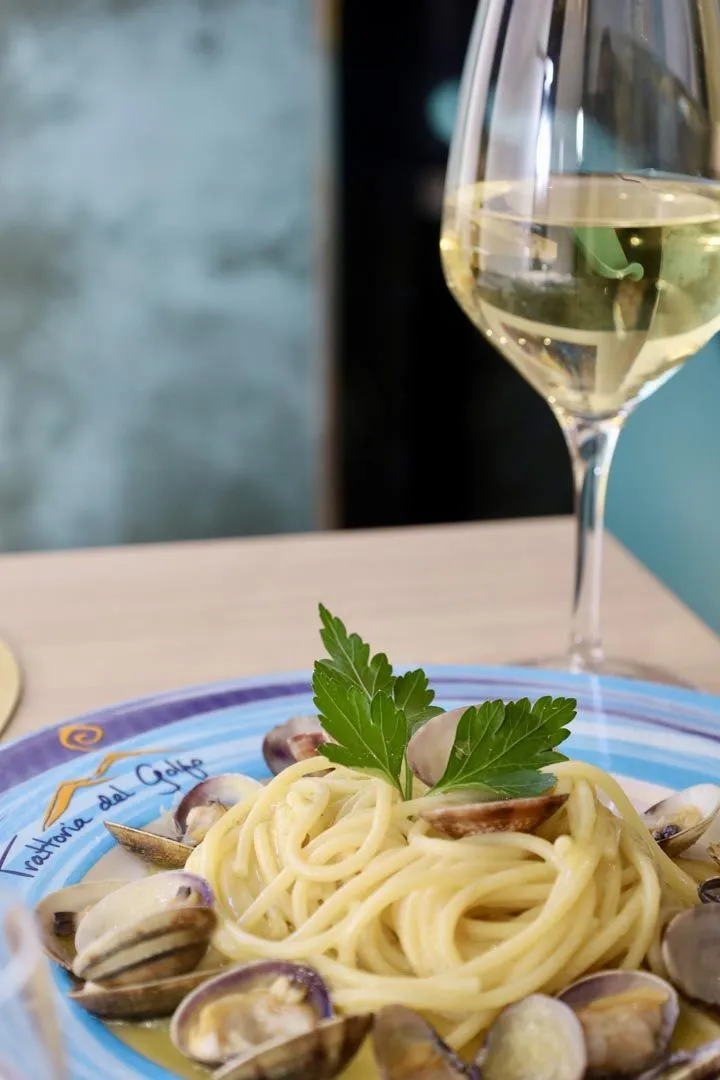
’O spaghetto a vongole. In Naples spaghetti with clams is said in the singular, and it is the all-but-obligatory dish of Christmas Eve. It comes in bianco and in rosso. The first written recipe for pasta with clams is attributed to Cavalcanti, in the “Cucina teorico-pratica” published in Naples in the first half of the nineteenth century. The story goes that Eduardo De Filippo, one evening when the larder was empty, invented spaghetti “a vongole fujute”: with runaway clams – that is, without any.
Pasta e patane. Pasta, patate e provola is cooked like a risotto, in the potato base, and the provola goes in once the heat is off. It must be “azzeccata”, that is, stuck together: creamy and compact, so much so that if you tilt the plate it stays put. It is made with pasta mista, born from the pieces left at the bottom of the barrels of loose pasta, which the sellers put together. It was once called “munnezzaglia”.
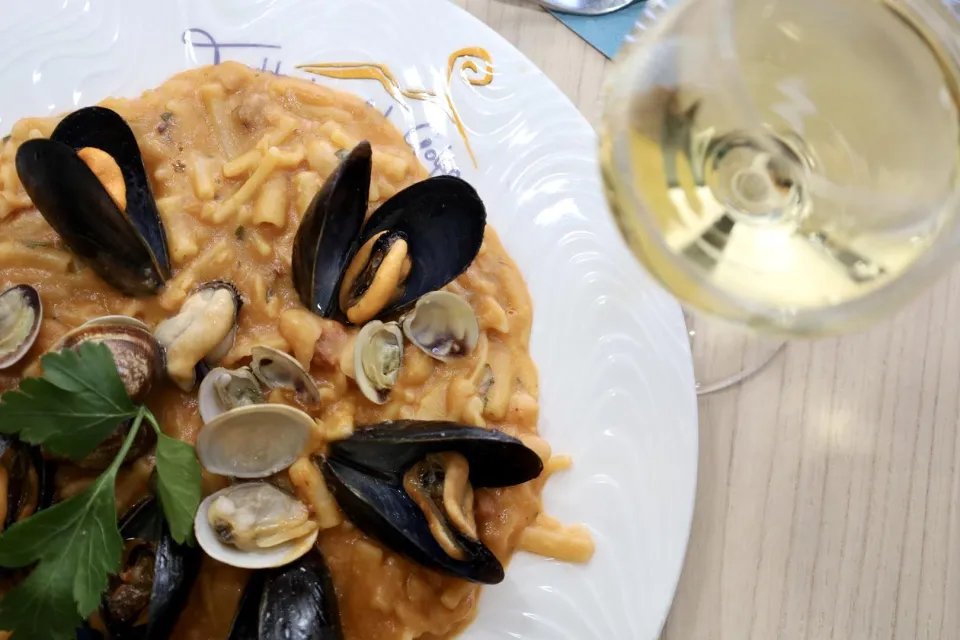
Pasta e fasule cu ’e cozze. The same pasta mista is the basis of pasta e fagioli alla pescatora, which brings together land and sea: the pasta cooks with the beans and the strained liquor of the mussels, and should turn out creamy, not soupy.
Scialatielli. Scialatielli ai frutti di mare are a fresh pasta from the Amalfi Coast with an author: sources credit them to the chef Enrico Cosentino, in the second half of the twentieth century. The name comes from Neapolitan: perhaps from “scialà”, to enjoy oneself, perhaps from “sciglià”, to tousle, because of their irregular shape.
Strangulaprievete. That – priest-stranglers – is what potato gnocchi were called in Naples. Gnocchi alla sorrentina are baked in an earthenware dish with tomato, mozzarella and basil; the name pays tribute to Sorrento, but there are no documents on their origin.
Seafood main courses
Frittura di paranza. Originally, paranza was the fry of small mixed fish, the low-value catch that fishermen kept for themselves. Today in Neapolitan trattorias the name is also used for fried prawns and squid. As early as 1863 Achille Spatuzzi distinguished fravaglia, small red mullet appreciated even by the well-off, from “mazzamma”, the leftovers of the catch that ended up on the tables of the poorest.
Baccalà. Baccalà alla siciliana is salt cod stewed with tomato, olives and capers. Baccalà is the Christmas Eve fish in Naples, especially fried, together with capitone, eel: Christmas Eve is a meatless day. In 1884 Serao counts the smell of “baccalà in molle” among those of the Pignasecca market.
Oysters. Oysters have a very ancient history in the Gulf. Pliny the Elder writes that Sergius Orata created the first artificial oyster beds at Baiae and judged those of Lake Lucrino the best. In the eighteenth century the Bourbons farmed them on Lake Fusaro, and Ferdinand IV liked to sell them in person. In the nineteenth century the oysters of the Fusaro were bought at the stalls of the oyster sellers of Santa Lucia, which a guidebook of 1845 describes as each lit by a lantern, “almost the look of a permanent illumination”.
The catch of the day. The most famous fish market in Naples is Porta Nolana, where clams are opened in front of the customer to show they are alive. On the night of 23 to 24 December Neapolitans crowd it, together with the Pignasecca, Pozzuoli and Torre del Greco, for the fish for the Christmas Eve dinner. On the menu, the catch of the day changes with whatever arrives in the morning; octopus also comes fried and chargrilled.
Side dishes
’E friarielle. Friarielli are the young, tender flower shoots of a variety of turnip tops, picked before they bloom. The plant is the same as the cime di rapa of Puglia, which however include leaves and stems. The name, according to the most widely cited theory, comes from “frijere”, to fry: they are tossed in a pan with olive oil, garlic and chilli. The best are found from late autumn to early spring. They should not be confused with friggitelli, sweet green peppers.
Puparuoli. That is what peppers are called in Neapolitan. Pan-fried, they are a home-style side dish; fried, they were already street food in the nineteenth century, when Serao named the “women frying peppers” of Santa Lucia.
Desserts
’O babbà. The Neapolitan babà is a mushroom-shaped leavened dough soaked in a rum syrup. It was not born in Naples: it comes from Lorraine, from the court of the exiled Polish king Stanisław Leszczyński, and took shape in Paris with the pastry cook Nicolas Stohrer, whose shop, opened in 1730, is still trading. It was brought to Naples by the monsù, the French cooks of the great families, and here it took on the shape and the soaking syrup it has today. The Campania Region recognises it among its Traditional Agri-food Products. That the name comes from Ali Baba is a legend. That in Naples “si’ comme a nu babbà” is a compliment, on the other hand, is true.
Sorbet. At the end of the seventeenth century Antonio Latini, steward to the Spanish viceroy, wrote: “Here in Naples it seems that everyone is born with the genius and the instinct for making Sorbets”. Without freezers, people used snow from Monte Faito and Vesuvius, stored in pits and mixed with salt. In 1775 the physician Filippo Baldini published in Naples the first treatise devoted to sorbet. Ours is lemon sorbet.
Delizia al limone. Delizia al limone is a recent dessert with an author: the Sorrento pastry chef Carmine Marzuillo, who in the 1970s paired sponge cake with a cream made from the Ovale di Sorrento lemon.
Torta caprese. Torta caprese is made of almonds and chocolate, without flour. The story goes that a pastry cook on Capri, in the 1920s, forgot to put the flour in: it is the most popular legend, but there are no documents.
Where to eat them in Naples
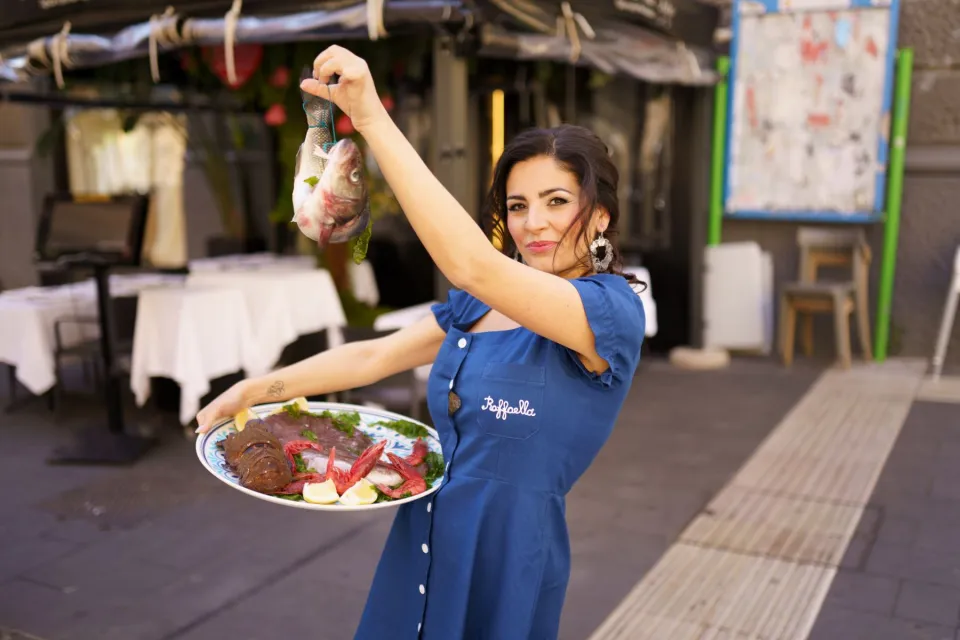
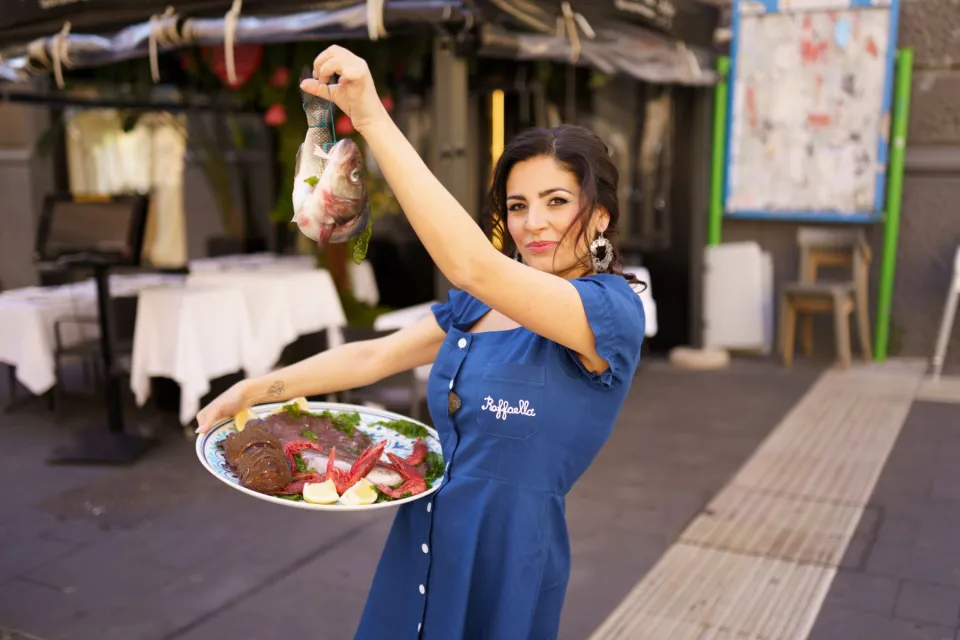
All these dishes are on the menu at Trattoria del Golfo, a family-run trattoria on Via Santa Brigida, a stone’s throw from the Teatro San Carlo and the Galleria Umberto I. In the kitchen is Antimo Silvestre, with his sister Raffaella beside him. The fish arrives every morning, and the menu changes with the sea. For bookings, opening hours and directions, see our Find us page.
Why is it called genovese if it’s a Neapolitan dish?
Nobody knows for certain. The most widely cited theories are the Genoese cooks of the port of Naples, a cook nicknamed “’o Genovese”, or the fact that in the Middle Ages the name of Genoa was linked to pasta. None is documented.
Why do Neapolitans say ’a genovese, ’o babbà, ’e friarielle?
In Neapolitan the article is ’o for the masculine, ’a for the feminine and ’e for the plural, and in Naples dishes are almost always called with the article in front.
What are friarielli?
The young, tender flower shoots of a variety of turnip tops, picked before they bloom and tossed in a pan with olive oil, garlic and chilli. They are not friggitelli, which are sweet green peppers.
What do people eat in Naples on Christmas Eve?
Spaghetti with clams is never missing from the Christmas Eve table, and the fish of the evening is baccalà, especially fried, together with capitone. Christmas Eve is a meatless day.
What do people eat in Naples on Maundy Thursday?
Mussel soup, with tomato and chilli. Impepata di cozze is its simplest version, without tomato.
Is babà a Neapolitan dessert?
It was born in Lorraine and took shape in Paris, but in Naples, brought by the monsù, it acquired today’s mushroom shape and rum syrup. The Campania Region recognises it among its Traditional Agri-food Products.
Is aubergine parmigiana from Naples or Sicily?
It is disputed. The first written recipes are Neapolitan, by Vincenzo Corrado in the eighteenth century and Ippolito Cavalcanti in the nineteenth; the Sicilians claim the name. No source settles the question.